
Home | Kaverri | Hemanta Kumar Gupta | Kalpana Gupta | The Trust | The Award | The Jury | Rules & How to Apply | News | Contact Us
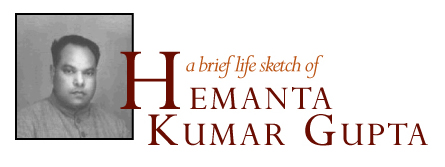
Hemanta Kumar Gupta (Khoka) was born on 3rd October 1911, at Gouripur, Assam. He was the son of Dr. Hara Kumar Gupta – who was the physician of the Royal family of Gouripur Raja Prabhat Chandra Barua His mother Subhasini Gupta was a major influence in the formation of his character.
After the premature death of his father, when Hemanta was twelve years old, he went to study at Barishal under the guardianship of his uncle Rajani Kanto Gupta who was a police officer in British India. Hemanta got involved with the Freedom movement and ran away to Sabarmati to the feet of the Mahatma. Mahatma Gandhi gave direction to young Hemanta to dedicate his life for the Freedom Movement of his Motherland. The young eighteen year old boy returned to his ancestral house at Dalia, in Sylhet District of Assam and plunged himself into the Freedom Movement. He was mercilessly beaten by the British and sent to the jails on many occasions.
After his solitary confinement in Shillong Jail, Hemanta took up the appointment as the correspondent of the Asssociated Press of India .He started the Assam Office of the Hindustan Standard and Ananda Bazar Patrika in Shillong on 10th December 1938.
Again during the “Quit India Movement” he was sent to jail and was Externed from the Khasi and Jaintia Hills and later Interned at Dalia. In 1945 he took on the responsibility of the Secretary, of the Khasi and Jaintia Hills District Congress.
During his involvement with the Congress party, he met Kalpana Barua another activist of the Mahila Sangha and the Congress Party. This meeting led to a blissful marriage on 26th November 1948.
Hemanta was involved in the socio-cultural life of Shillong and the North East India. He was the Secretary of the District Opium Prohibition Committee. He was the member District Welfare Committee, State Planning Advisory Board and Bangiya Sahitya Parishad. He was one of the founder members of the Press Club of Assam. He was the Charter Member of the Rotary Club of Shillong. He along with Robin Mitra and Ajit Bose started the Sri Aurobindo Path Mandir in Shillong. He was actively associated with many other socio-cultural activities along with his wife Kalpana.
But it was through Journalism that Hemanta wanted to serve his Motherland. He was a keen observer of the developments in North East India and reported on all events, developments and matters of concern in this area in the Hindustan Standard and Ananda Bazar Patrika. His news traveled to the world media due to his involvement with the Associated Press, which later became the Press Trust of India.
The world got the details of Dalai Lama’s escape to India through the news sent by Hemanta. On 26th May 1959, The Press Trust of India offered a special incentive of Rs. 100/- to Hemanta for the first hand and authentic news that he had supplied. Hemanta was the first journalist to tell the world about the Chinese occupation of Longju in Subansiri Frontier Division and Khinazemans in Kameng Frontier Divison of North East Frontier Agency, NEFA in August 1959.
While covering the Bye-Election in Cherrapunjee on 7th January 1960, Hemanta met with a tragic road accident which ended his life prematurely. He was survived by his mother Subhasini, wife Kalpana, two daughters Kasturi and Kaverri besides a host of relations and friends.
After the premature death of his father, when Hemanta was twelve years old, he went to study at Barishal under the guardianship of his uncle Rajani Kanto Gupta who was a police officer in British India. Hemanta got involved with the Freedom movement and ran away to Sabarmati to the feet of the Mahatma. Mahatma Gandhi gave direction to young Hemanta to dedicate his life for the Freedom Movement of his Motherland. The young eighteen year old boy returned to his ancestral house at Dalia, in Sylhet District of Assam and plunged himself into the Freedom Movement. He was mercilessly beaten by the British and sent to the jails on many occasions.
After his solitary confinement in Shillong Jail, Hemanta took up the appointment as the correspondent of the Asssociated Press of India .He started the Assam Office of the Hindustan Standard and Ananda Bazar Patrika in Shillong on 10th December 1938.
Again during the “Quit India Movement” he was sent to jail and was Externed from the Khasi and Jaintia Hills and later Interned at Dalia. In 1945 he took on the responsibility of the Secretary, of the Khasi and Jaintia Hills District Congress.
During his involvement with the Congress party, he met Kalpana Barua another activist of the Mahila Sangha and the Congress Party. This meeting led to a blissful marriage on 26th November 1948.
Hemanta was involved in the socio-cultural life of Shillong and the North East India. He was the Secretary of the District Opium Prohibition Committee. He was the member District Welfare Committee, State Planning Advisory Board and Bangiya Sahitya Parishad. He was one of the founder members of the Press Club of Assam. He was the Charter Member of the Rotary Club of Shillong. He along with Robin Mitra and Ajit Bose started the Sri Aurobindo Path Mandir in Shillong. He was actively associated with many other socio-cultural activities along with his wife Kalpana.
But it was through Journalism that Hemanta wanted to serve his Motherland. He was a keen observer of the developments in North East India and reported on all events, developments and matters of concern in this area in the Hindustan Standard and Ananda Bazar Patrika. His news traveled to the world media due to his involvement with the Associated Press, which later became the Press Trust of India.
The world got the details of Dalai Lama’s escape to India through the news sent by Hemanta. On 26th May 1959, The Press Trust of India offered a special incentive of Rs. 100/- to Hemanta for the first hand and authentic news that he had supplied. Hemanta was the first journalist to tell the world about the Chinese occupation of Longju in Subansiri Frontier Division and Khinazemans in Kameng Frontier Divison of North East Frontier Agency, NEFA in August 1959.
While covering the Bye-Election in Cherrapunjee on 7th January 1960, Hemanta met with a tragic road accident which ended his life prematurely. He was survived by his mother Subhasini, wife Kalpana, two daughters Kasturi and Kaverri besides a host of relations and friends.